Peace Lily Mattress Review: The Science of Sustainable Sleep
.png)
Peace Lily Mattress Review: The Science Behind Australia’s Favourite Eco-Bed
When researching a new mattress, it is easy to get bogged down in clever marketing and flashy discounts. But what if we bypass the hype and look strictly at the science of sleep?
We spend a third of our lives in bed, meaning the materials we sleep on directly impact our physical recovery, respiratory health, and overall well-being. In this review, we are breaking down the Peace Lily mattress through a scientific and research-backed lens.
Does 100% natural latex actually provide a better night's rest than standard synthetic foam? Let’s look at the facts.
1. The Biomechanics of Spinal Alignment
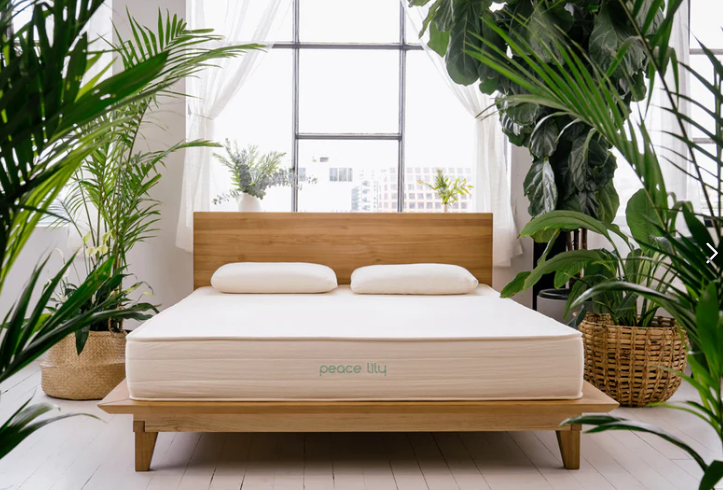
From an ergonomic standpoint, a mattress must do two contradictory things: it needs to be soft enough to relieve pressure on your joints (like hips and shoulders) but firm enough to support the natural curvature of your spine.
-
The Problem with Viscoelastic Foam: Traditional memory foam works by reacting to body heat, allowing you to sink in. While this feels plush initially, it often leads to a "hammock effect" where your heavier pelvis sinks too deeply, throwing your spine out of alignment and causing lower back pain.
-
The Latex Advantage: The Peace Lily mattress is engineered from natural Dunlop latex, which behaves differently at a molecular level. It has high elasticity, providing a "buoyant" support system. It pushes back against your body weight, keeping your spine neutrally aligned.
-
Scientifically Customisable: Because firmness preferences vary based on body weight and sleep position, Peace Lily includes a highly practical 2-in-1 flippable design (Medium on one side, Firm on the other). This allows you to scientifically dial in the exact ergonomic support your body requires without buying a second bed.
2. Indoor Air Quality and Respiratory Health
Sleep environment plays a massive role in our health. Modern sleep research increasingly warns about the impact of indoor air pollution, much of which comes straight from our furniture.
-
Eliminating VOCs: Most "bed-in-a-box" mattresses are made from polyurethane foams glued together with synthetic adhesives. These materials undergo a chemical process called "off-gassing," releasing Volatile Organic Compounds (VOCs) into your bedroom air. Breathing these in night after night can trigger headaches, asthma, and allergies.
-
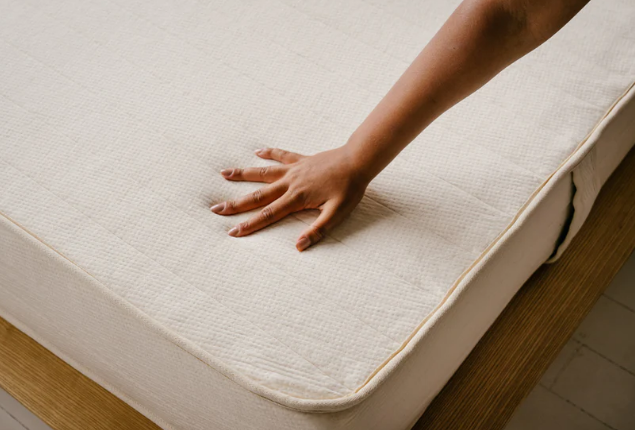
A Non-Toxic Formula: Peace Lily eliminates this hazard entirely. By utilizing sustainably harvested natural rubber sap and GOTS-certified organic cotton, the mattress is completely free from toxic glues, polyurethane, and chemical fire retardants. It is a naturally hypoallergenic environment, making it a brilliant, health-conscious choice for sensitive sleepers and children.
3. Thermoregulation for Deep REM Sleep
If you want to understand good sleep, you have to look at thermoregulation. Human biology dictates that our core body temperature must drop by roughly 1 to 2 degrees to initiate and maintain the deepest, most restorative stages of sleep (Deep Sleep and REM).
-
Beating the Aussie Heat: Synthetic foams are notorious thermal insulators—they trap your body heat, causing you to wake up sweating. The Peace Lily mattress utilizes the naturally open-cell structure of rubber latex. This microscopic network of air pockets promotes continuous airflow, actively drawing heat away from your body. Paired with a breathable organic cotton cover, it actively supports your body’s natural cooling process, which is an absolute lifesaver during a stinking hot Australian summer.
4. Material Science and Sustainability
Finally, looking at the structural integrity of the mattress, natural polymers simply outlast synthetic ones.
Polyurethane foams break down and compress over time, leading to the dreaded "mattress sag." Natural Dunlop latex, on the other hand, is highly resilient and incredibly durable. Backed by a 25-year warranty, the Peace Lily maintains its structural integrity for decades. Furthermore, at the end of its exceptionally long lifespan, natural latex and organic cotton are biodegradable, meaning your bed won't sit in an Aussie landfill for the next 500 years.
The Scientific Pros and Cons
The Pros:
-
Ergonomic Support: Buoyant natural latex promotes exceptional spinal alignment without bottoming out.
-
Clinically Clean Air: Zero VOCs and no synthetic off-gassing protect your respiratory health.
-
Advanced Thermoregulation: Highly breathable materials facilitate the core temperature drop needed for deep sleep.
-
Eco-Friendly Lifecycle: Made from renewable resources that won't harm the planet.
The Cons:
-
High Density = High Weight: Natural, high-density rubber is exceptionally heavy. You will definitely need a mate to help you unbox or flip this mattress.
-
Different Sensorimotor Feel: If your brain is wired to expect the deep, contouring sink of memory foam, the responsive, surface-level support of natural latex will require a brief neuro-physical adjustment period.
The Final Verdict
When you strip away the marketing fluff and look at the actual science, the Peace Lily mattress stands head and shoulders above its synthetic competitors.
It isn't just a comfortable place to crash; it is an active investment in your musculoskeletal health, respiratory hygiene, and sleep hygiene. If you want a bed that works with your biology rather than against it, this natural Aussie eco-bed is truly a fair dinkum masterpiece.
Popular Blog

.png)